About Managed Accounts
Understanding of the different kinds of managed accounts available in Australia is still not widely shared. In this section of our site, we begin with some of the common misconceptions regarding Managed Discretionary Accounts (MDAs) and then provide an overview of the different regulatory structures . We then go onto explore some of the practical differences between MDAs and SMAs what that means for the best use of each structure.
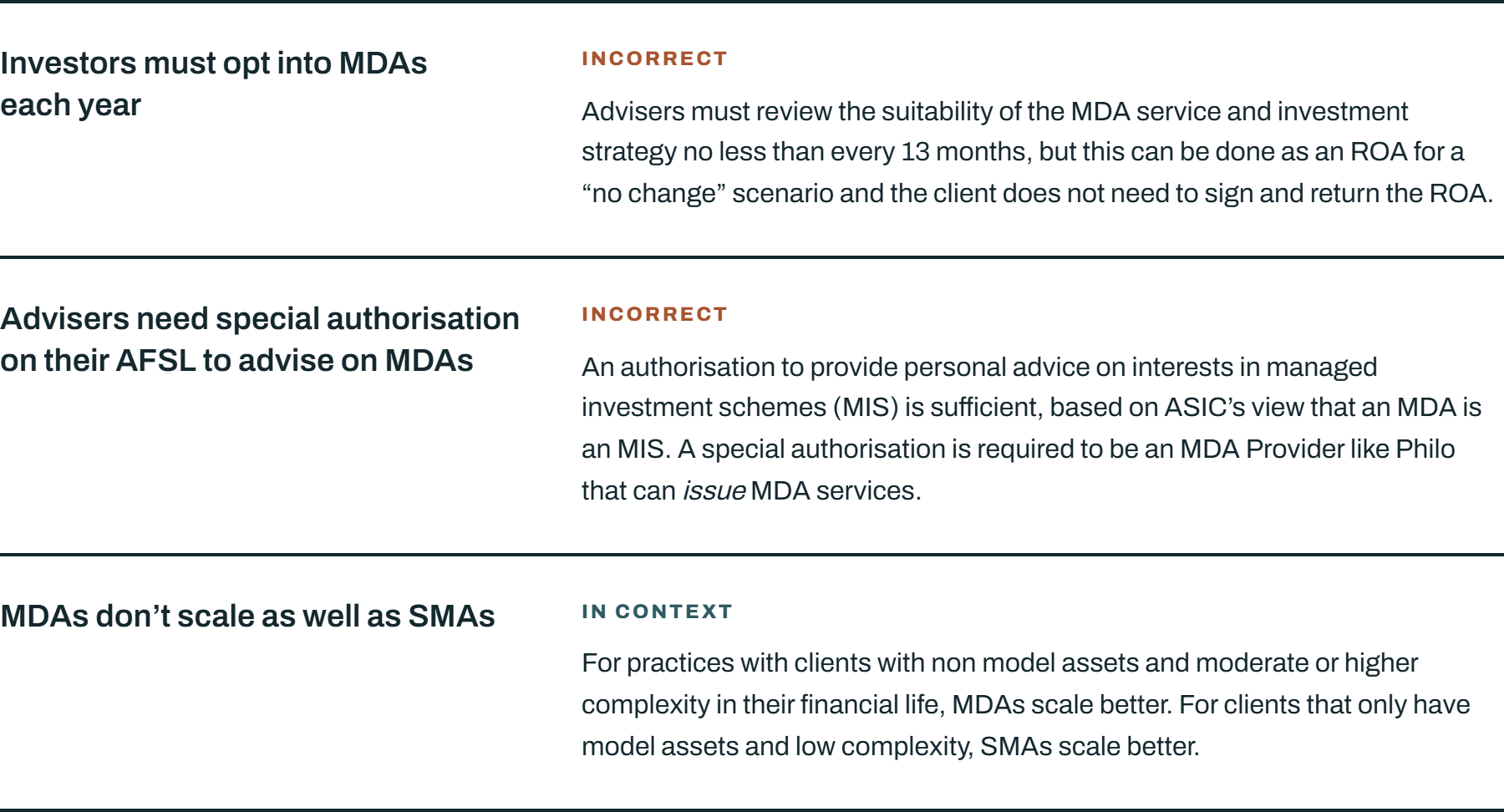
Common Misconceptions
What is a managed account?
"Managed account" is an umbrella term that applies to different types of portfolio management services that are:
Discretionary - the managed account provider or operator is able to make investment decisions on behalf of the investor
Non unitised - they are account based services rather than a unitised structure like a managed fund.
Of a nature where the investor may have the tax advantages of beneficial ownership of each investment in the portfolio
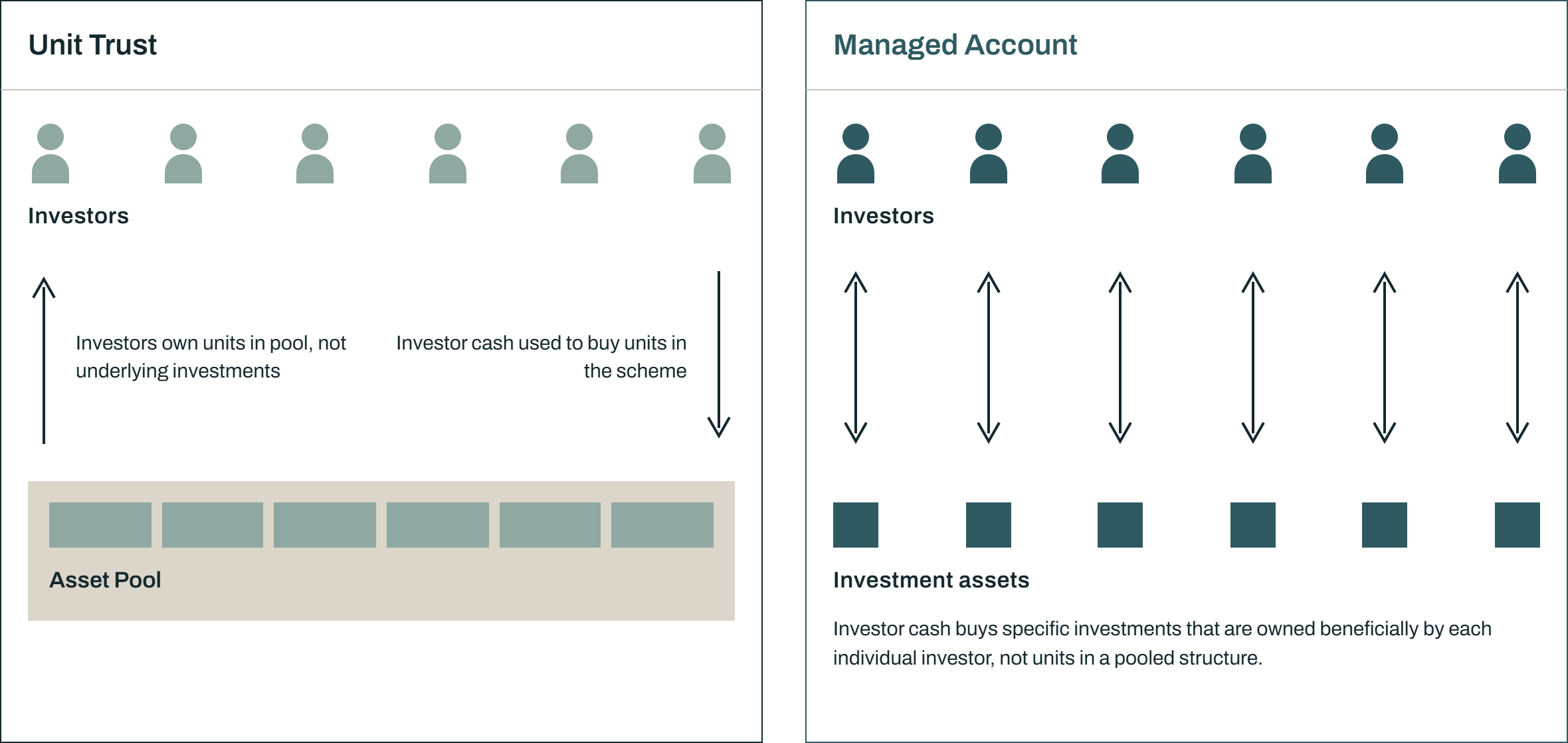
A simplified view of the difference between how assets are owned in a unit trust and a managed account is shown below:
Is there more than one type of managed account?
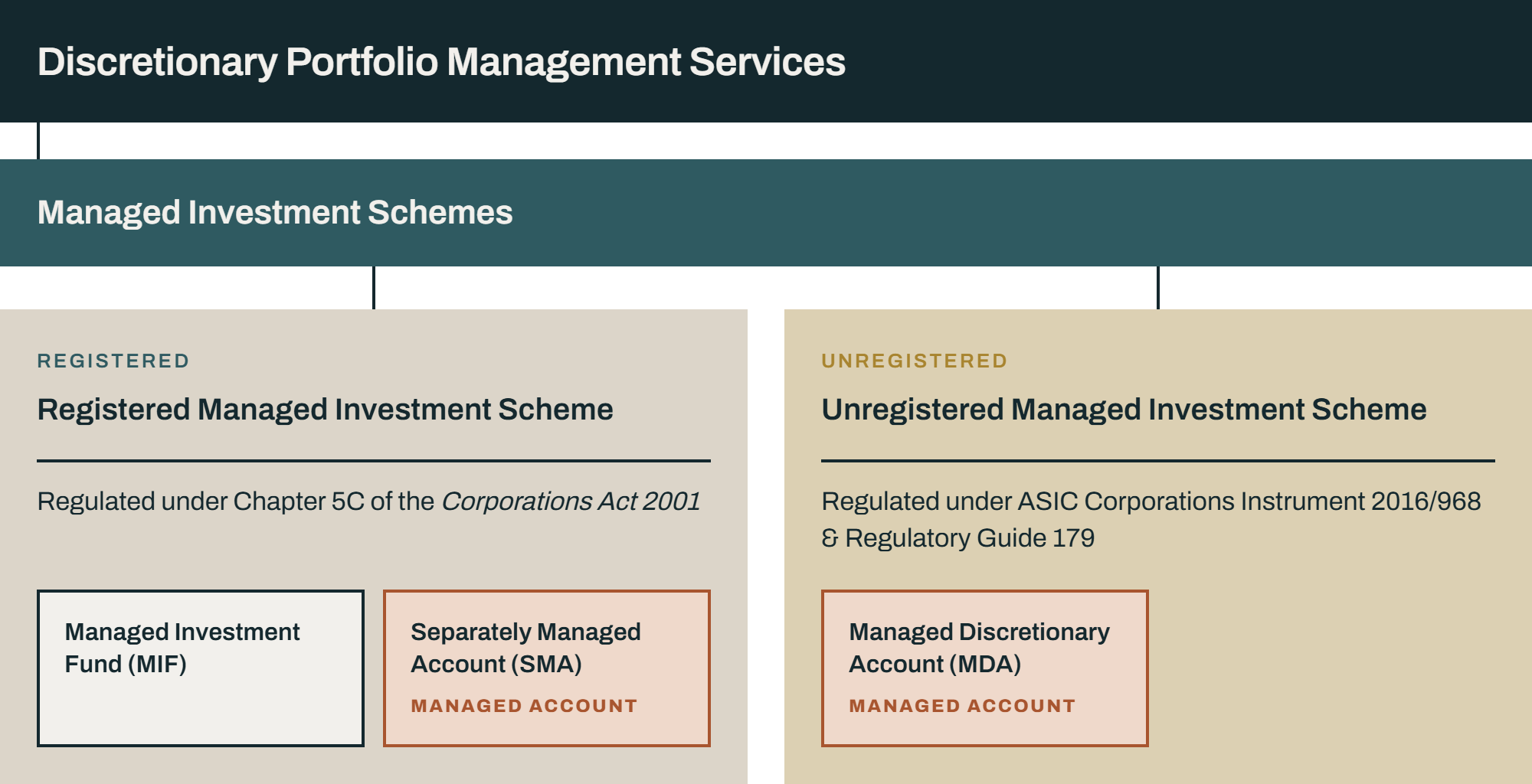
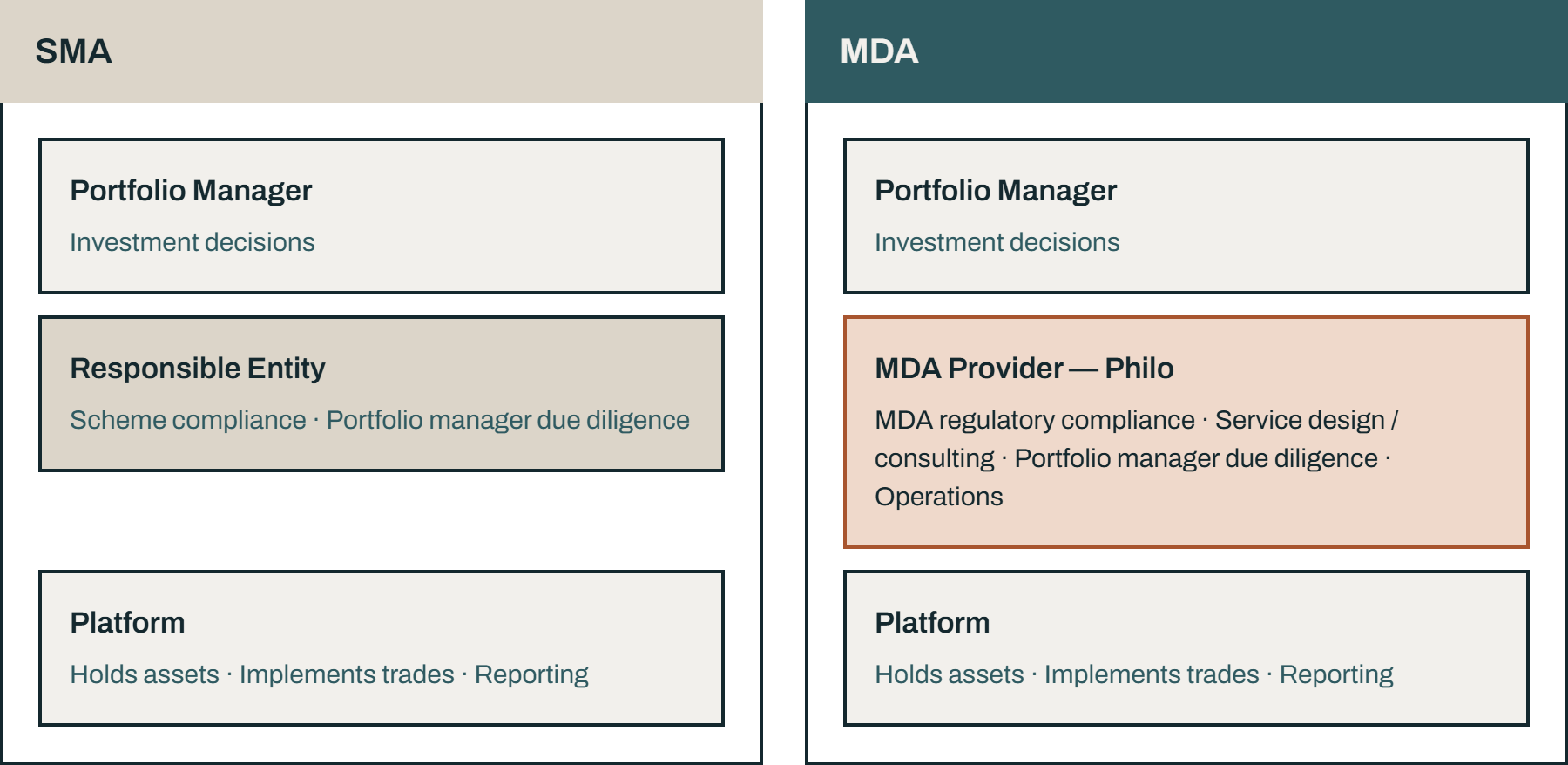
Most managed accounts are offered under one of two regulatory frameworks as set out in the diagram immediately below. Separately Managed Accounts (SMAs) share regulation with unit trusts, while Managed Discretionary Accounts (MDAs) are regulated under their own instrument and regulatory guide.
One of the most notable differences between the two regimes, is that SMAs are offered under a Product Disclosure Statement (PDS), while MDAs are offered under contract. Retail investors must receive personal advice and a statement of advice (SOA) before investing in an MDA, and their adviser must confirm the suitability (or otherwise) of the service and investment program no less than every 13 months. The absence of a PDS is one of the factors that make MDAs more like a service than a product. Wholesale MDAs do not have the personal advice obligation or the ”13 month rule”.
SMAs and MDAs: how the two managed account structures compare
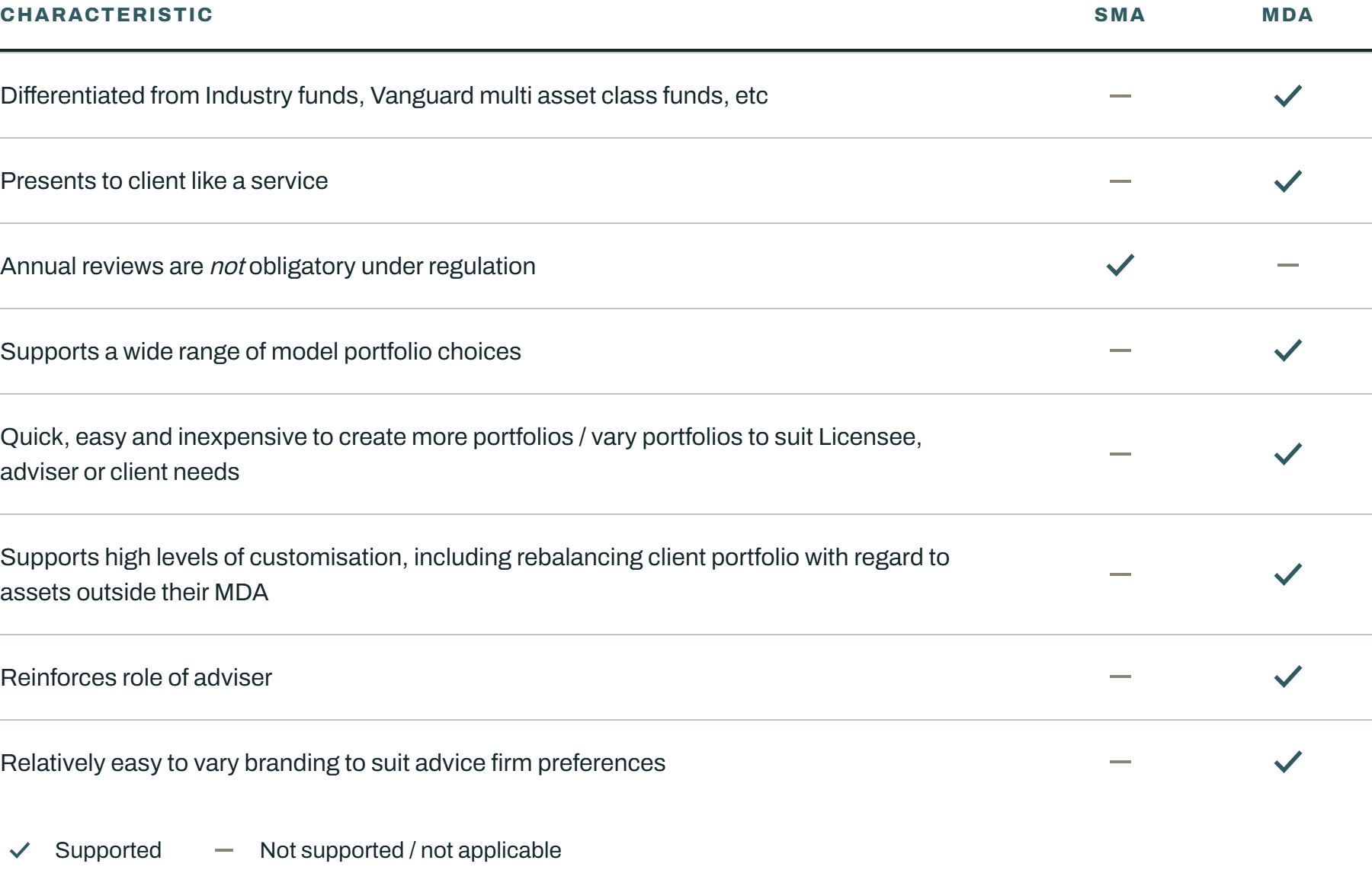
Both are non-unitised, and both allow discretionary portfolio management. As we saw above, both are technically managed investment schemes. The differences show up in how they present to clients, how much customisation they support, and how quickly portfolios can be created or varied. We explore that further below.
Roles of parties
For SMAs the party that issues the product and is responsible for scheme compliance is the Responsible Entity. For MDAs the issuer is the MDA Provider. Philo is a 3rd Party MDA Provider, which is to say we issue MDAs for use by third parties rather than internal advisers (of which we have none). This means an advice firm can have an MDA service that Philo has issued for them, based on their specific requirements. While Philo’s role is analogous to that of a Responsible Entity, our services are somewhat broader and include design consultation, implementation support and operations.
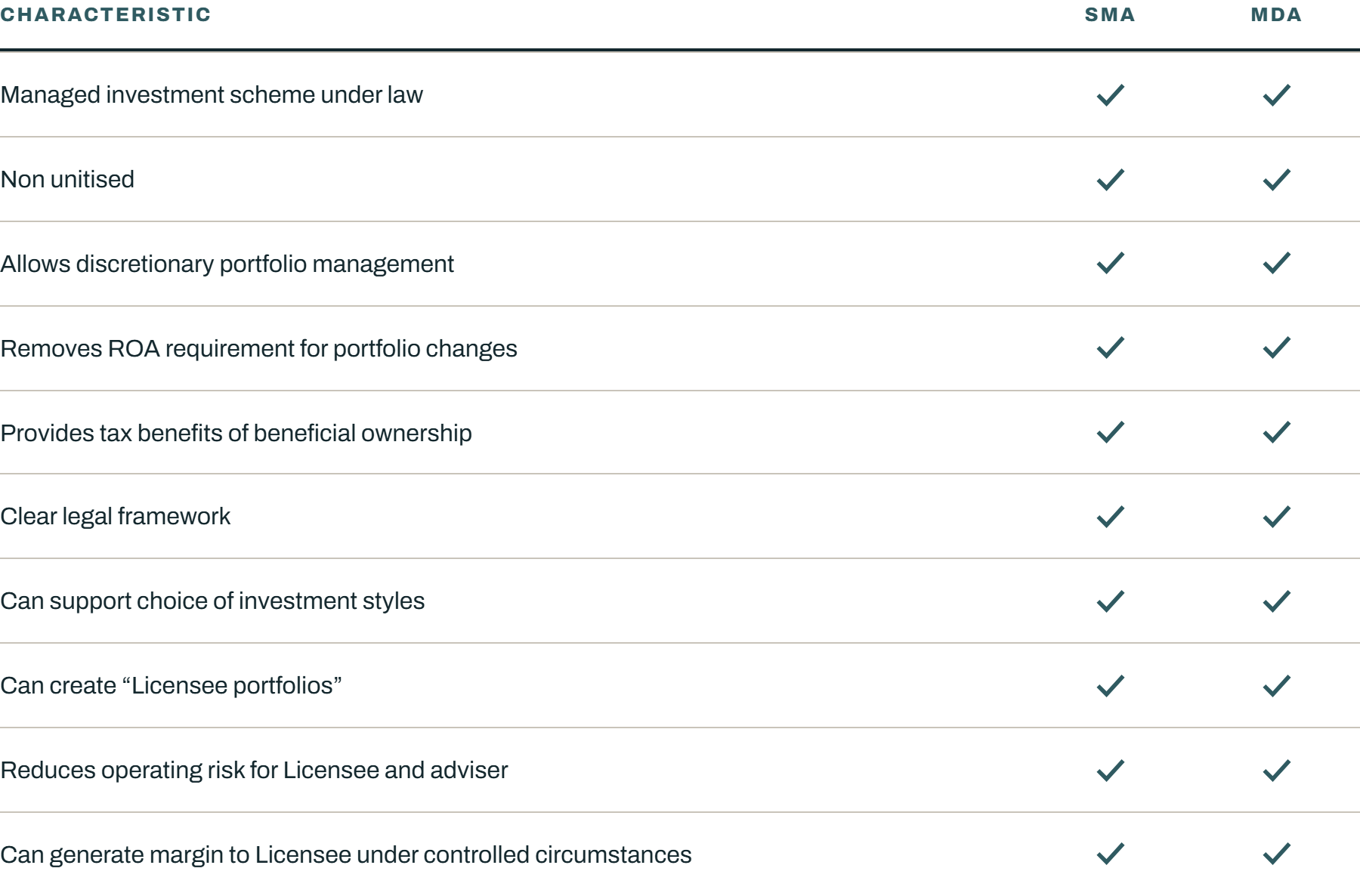
SMAs and MDAs offer common features
Ten characteristics that both structures share. Anything on this list is available whichever route an advice firm takes.
But there are material differences as well…
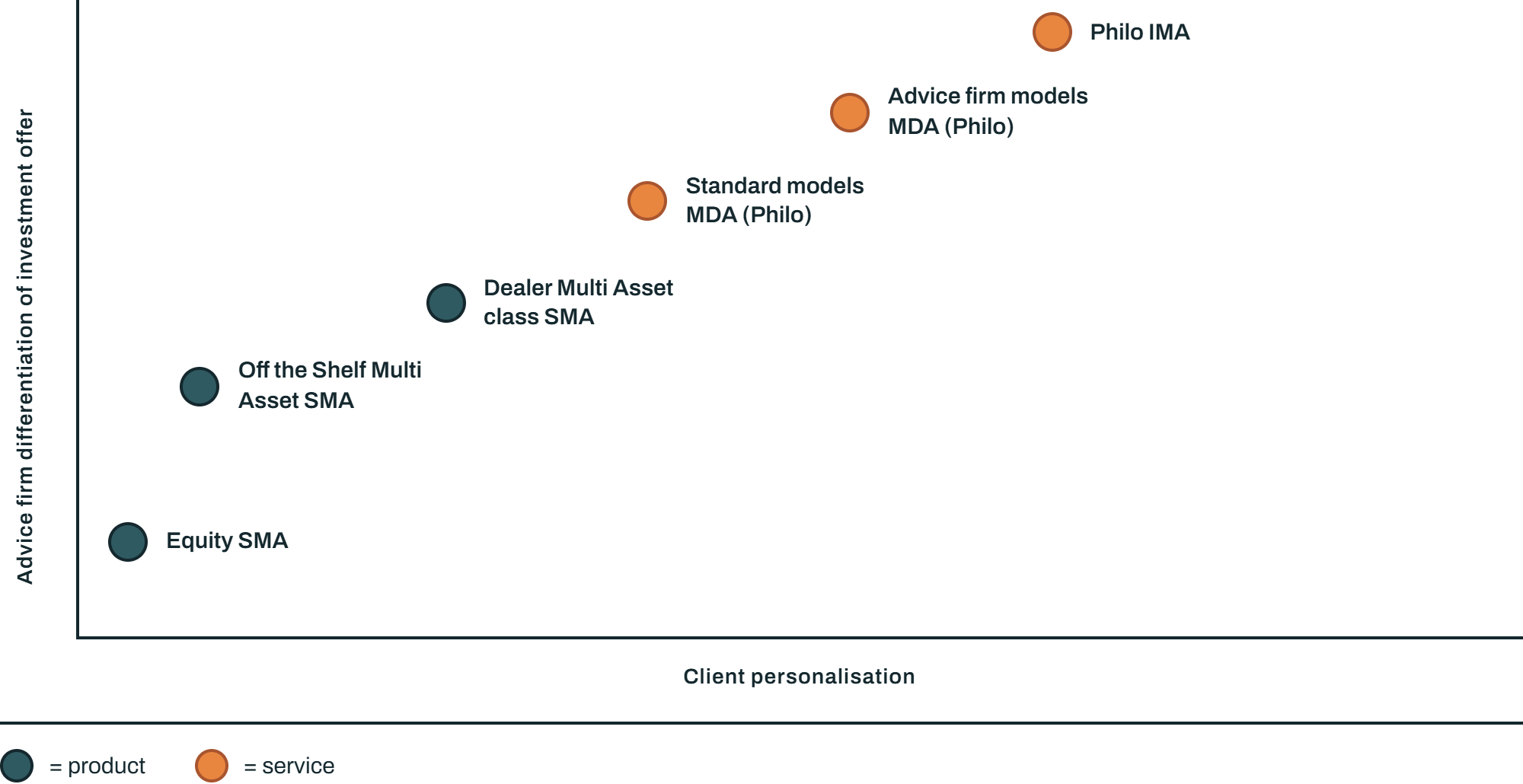
Relative positioning of Managed Accounts in the market
Philo’s portfolio manager functionality and the ability to customise client portfolios make it possible to address a broader range of needs and differentiate your wealth management service. See the adviser solutions, portfolio manager solutions and licensee solutions pages of this website for more information.
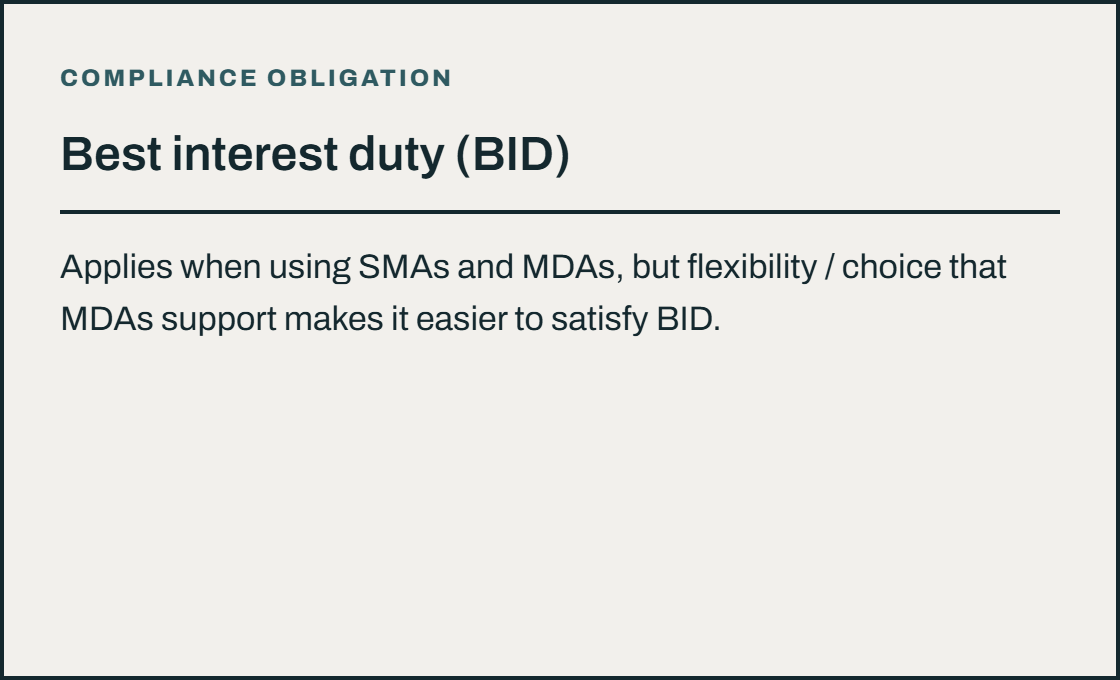
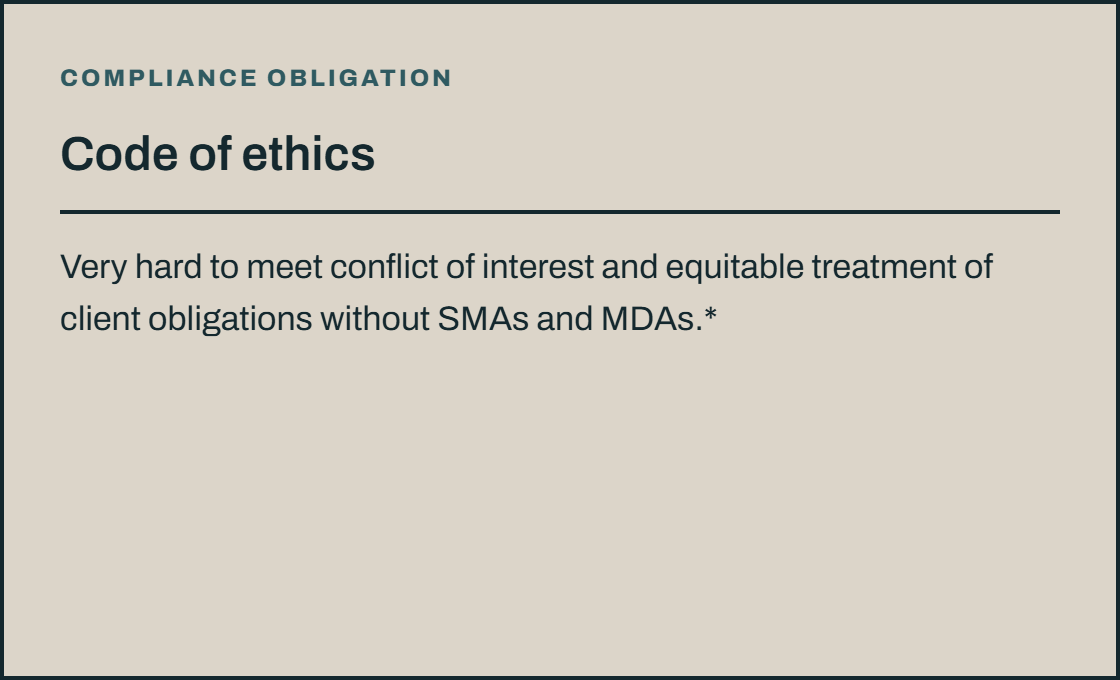
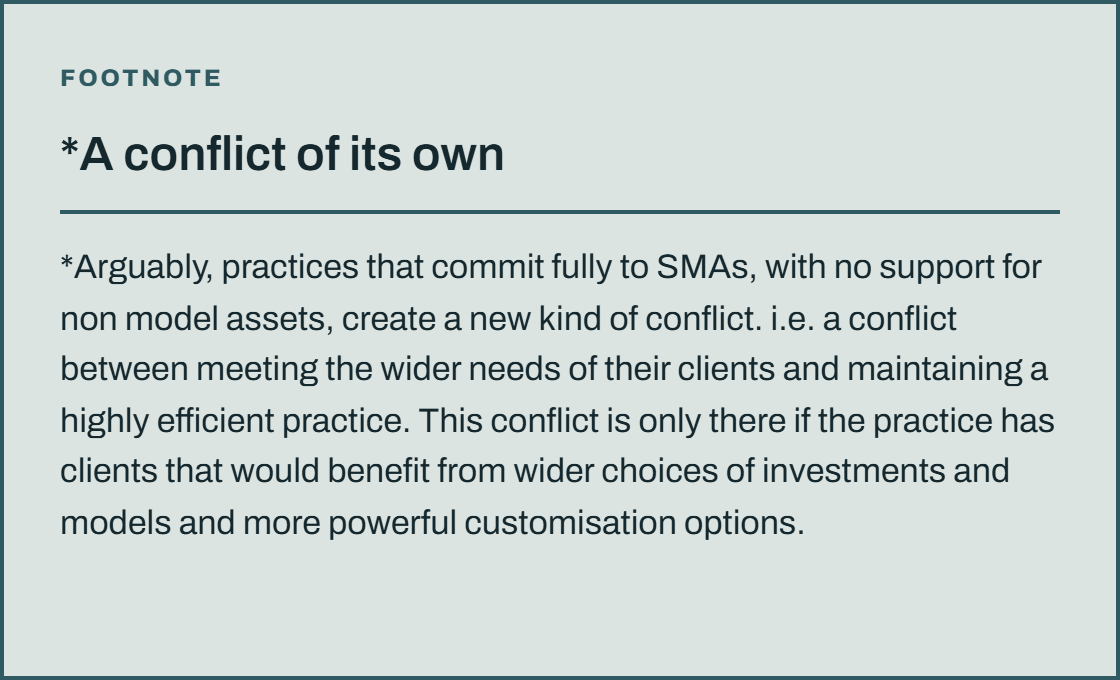
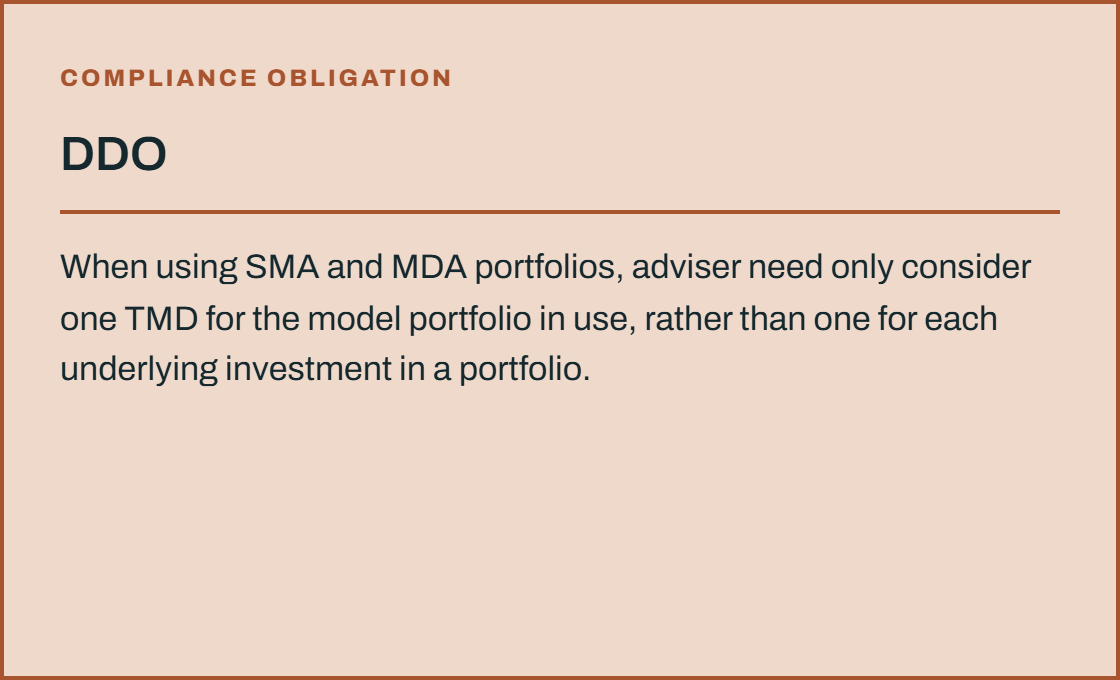
How managed accounts fit with compliance obligations
MDAs are the solution for forward thinking practices
Both SMAs and MDAs delivery outstanding practice efficiency benefits when implemented for client bases that have simple needs. However, as the sophistication of client needs grows, SMA users require more and more manual processes to provide wholistic management of client portfolios. In contrast, Philo MDAs continue to scale due to the additional customisation functionality provided.
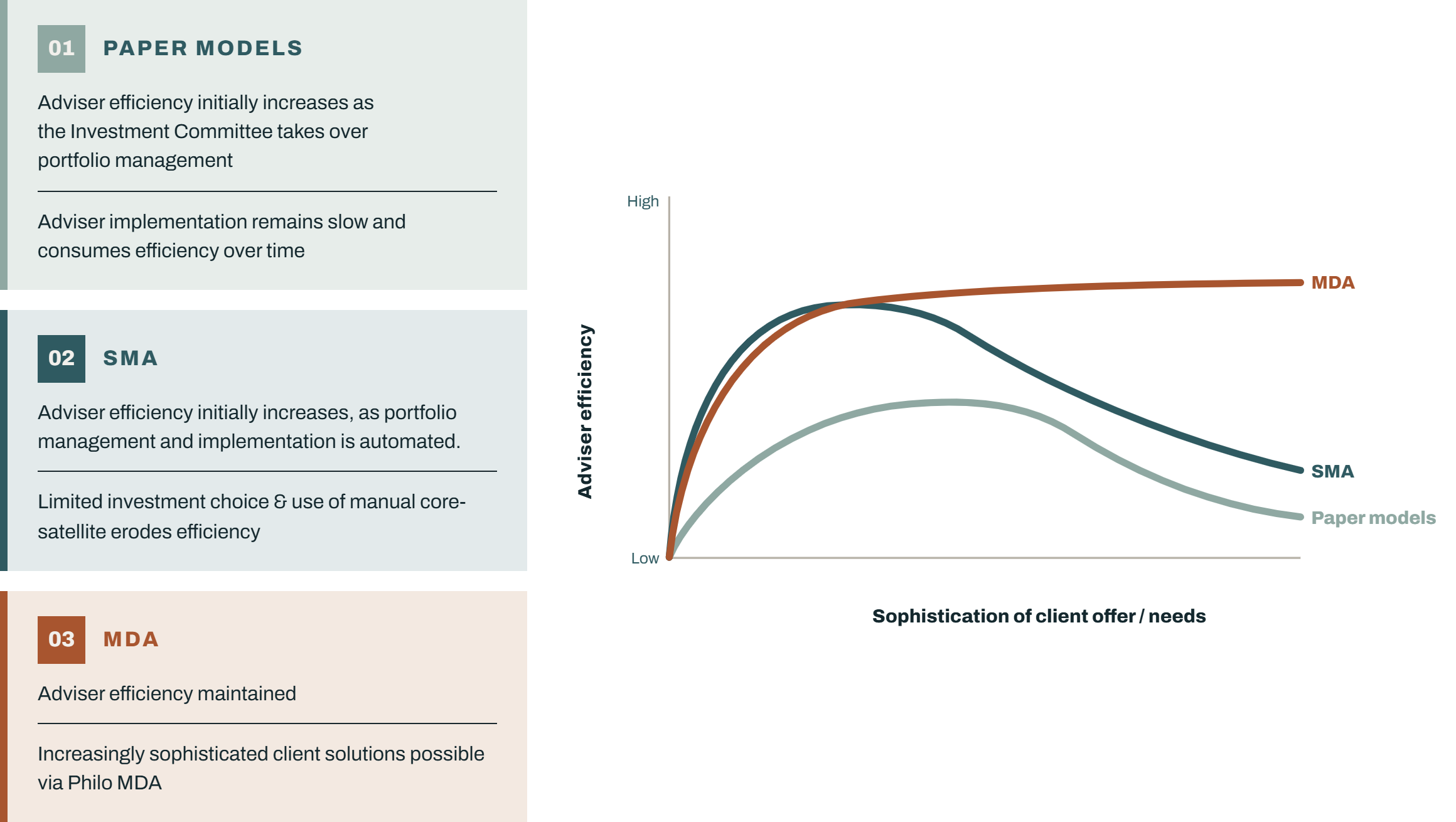
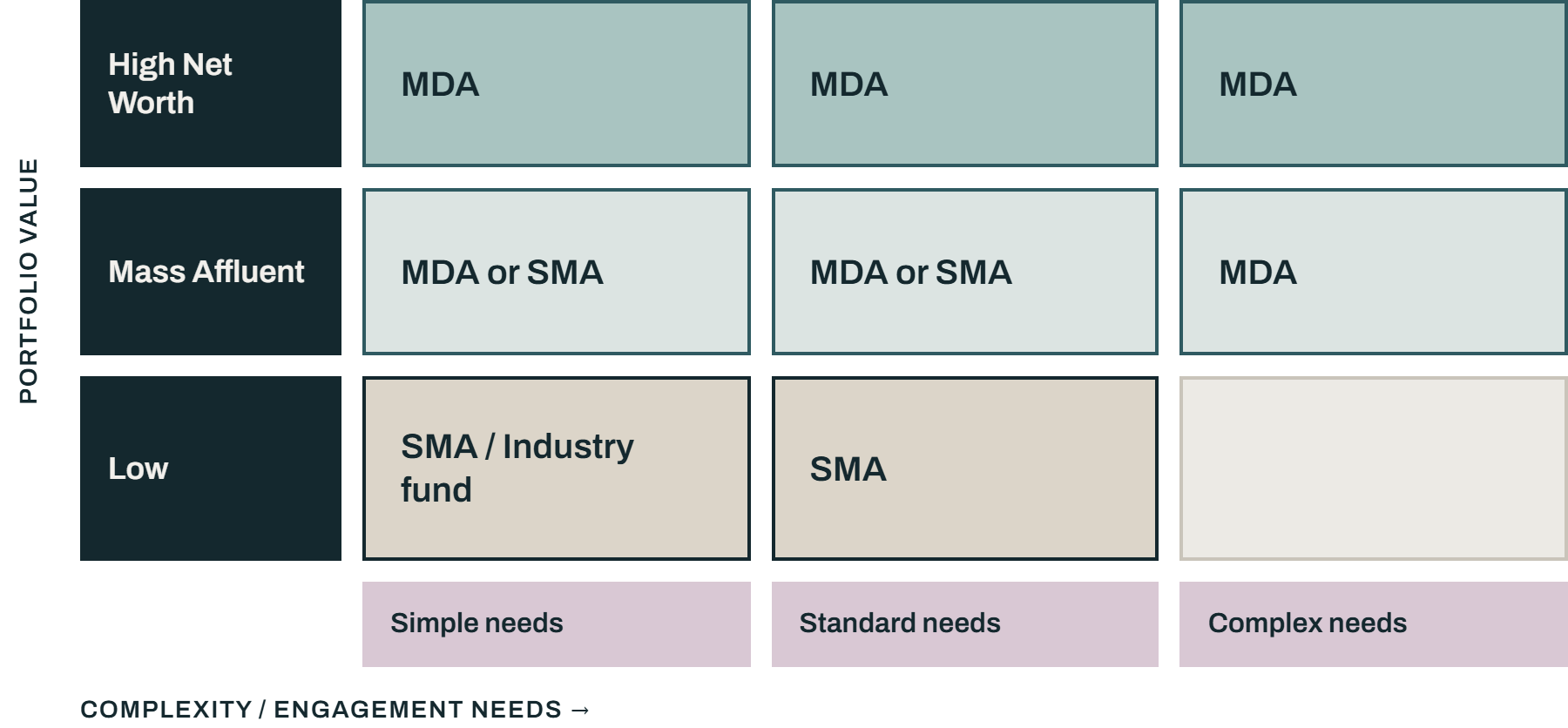
MDA or SMA? Per Client Segment
In practice, most advice businesses benefit from using SMAs and MDAs. In our view, its a case of using the right tool for a given job. SMAs are well suited to smaller portfolios and / or clients that can have all their needs met by a single model portfolio. However for clients with legacy holdings, satellite assets, higher customisation requirements or investments spread over multiple entities, Philo MDAs provide a more suitable solution. The diagram below provides an illustration of how the two different managed account structures can be used. For financial planning practices that only want to support one kind of managed account, in our opinion, MDAs are the more flexible structure that better suits the widest range of investor types.